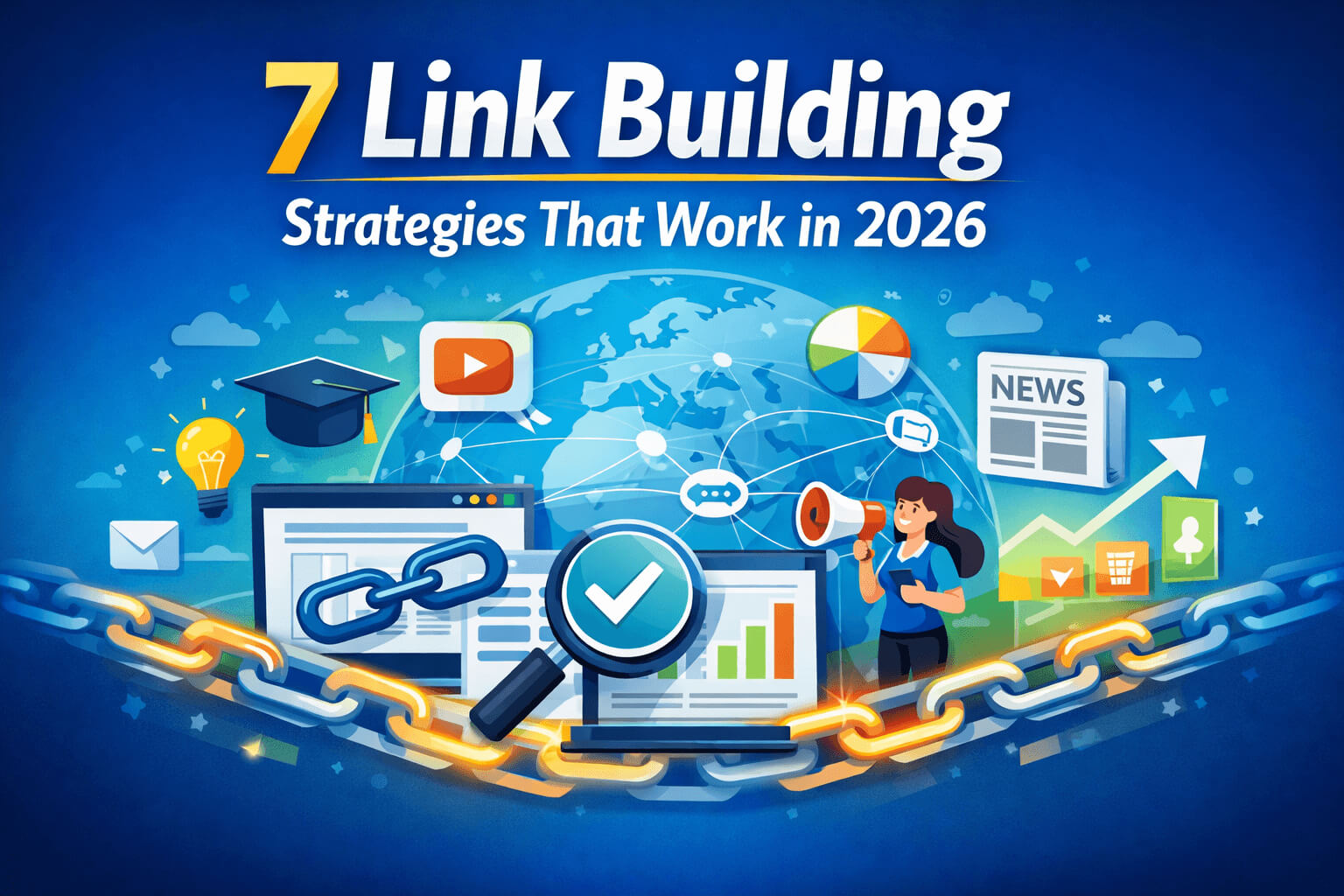
7 Amazing strategies to build links in 2026

**Updated for 2026

Although Google has aggressively cracked down on manipulative link building over the years, links remain one of the strongest ranking signals in search.

The difference in 2026 is how those links are evaluated.

From Google’s perspective, links should be the byproduct of real value – earned through relevance, authority, and genuine editorial decisions. Forced links, mass outreach, and cross-niche spam no longer move the needle and often do more harm than good.

Google has been clear about this direction in its own documentation on link spam and ranking systems, particularly in its Google Search Central guidelines.

Today, Google evaluates who is linking, why they’re linking, and how well the link fits within the surrounding content. Relevance, topical alignment, and editorial intent matter far more than raw volume.

That said, despite tighter enforcement and smarter algorithms, there are still several gray-hat-leaning but safe link building strategies that are actively used by SEO professionals – and they still work when done properly.

Below are 7 proven link building strategies that continue to perform in 2026 without putting your site at risk.


1. Guest Posting (Done Properly)

Guest posting never disappeared – it just evolved.

In 2026, guest posts only work when:

  • The site is topically relevant
  • The content adds real value to that audience
  • The link placement makes editorial sense

Google has repeatedly clarified its stance on guest posting in its Google Search Central documentation, noting that editorial intent is the deciding factor – not the act of guest posting itself.

What still works is relationship-driven publishing on authoritative, niche-aligned sites. When executed properly, guest posting delivers:

  • Contextual backlinks
  • Brand exposure
  • Trust signals
  • Long-term industry relationships

2. Expert Roundups (Modernized)

Expert roundups are still effective, but only when executed strategically.

The outdated “50 experts answer one generic question” format has largely lost impact. What works today are focused, insight-driven roundups that resemble original research or expert panels.

Well-executed roundups align closely with digital PR methodologies, a topic frequently discussed by platforms like Ahrefs and SEMrush.

Beyond links, roundups help:

  • Identify key influencers in your niche
  • Build warm outreach lists
  • Encourage organic shares and secondary links

3. Turning Brand Mentions into Links

This remains one of the easiest wins in link building.

If your brand, product, or content is mentioned without a link, you already have context and intent working in your favor. Converting those mentions into links is often a simple outreach task.

Tools like Ahrefs and BuzzSumo make it easy to identify unlinked mentions across the web.

These links are highly trusted because they’re:

  • Editorial
  • Contextually relevant
  • Difficult to fake

4. Broken Link Building

Broken link building is still effective because it solves a real problem.

The core process has been well documented by industry authorities such as Backlinko, and it continues to work when paired with quality content.

In 2026, success depends on improvement, not duplication. Your replacement content must be:

  • More current
  • More comprehensive
  • Clearly better than the original

When done correctly, broken link building produces clean, one-way editorial links with minimal risk.


5. Explainer Videos & Visual Assets

Text-only linkable assets are becoming harder to pitch.

Short explainer videos, diagrams, and visual summaries perform exceptionally well because they:

  • Improve user engagement
  • Fit naturally into editorial content
  • Offer assets publishers don’t want to create themselves

This trend aligns closely with Google’s push toward helpful content and user experience, outlined in its Helpful Content system documentation via Google Search Central.

Visual assets embedded within high-quality content frequently attract links organically over time.


6. Scholarships (Still Effective, More Scrutinized)

Scholarship link building still works – but it’s under closer scrutiny than ever.

SEO communities such as Search Engine Journal have highlighted how low-effort scholarship campaigns are increasingly ignored.

What still works:

  • Legitimate scholarships with real criteria
  • Transparent branding
  • Actual award distribution

When executed correctly, scholarships can earn high-authority educational links that are otherwise extremely difficult to obtain.


7. HARO & Journalist Platforms

Platforms like Help a Reporter Out remain valuable for earning top-tier media links, but competition is fierce.

To succeed in 2026, contributors must provide:

  • Original data or insights
  • First-hand experience
  • Fast, well-structured responses

HARO works best when treated as a PR channel, not a link building shortcut.


New in 2026: Linkable Data & Mini-Studies

One of the strongest modern strategies is publishing small, niche-specific datasets.

This approach mirrors tactics used in large-scale studies by companies like SparkToro, but can be executed effectively even at a smaller scale.

Original data gives journalists and bloggers something to cite, which naturally attracts high-quality backlinks.


New in 2026: Content Refresh Links

As publishers update older content, outdated references are removed.

By monitoring aging resources and publishing refreshed, authoritative replacements, you can earn links during editorial update cycles – one of the most natural link acquisition moments available today.

This tactic aligns closely with content decay strategies discussed by platforms like Ahrefs.


What to Avoid

So-called “niche edits” placed on hacked or compromised sites are not recommended unless you fully understand the risks. These links are unstable, temporary, and increasingly easy for Google to invalidate.

As Google’s spam detection systems improve, context and intent outweigh manipulation every time.


Final Thoughts

Link building hasn’t died – it’s matured.

The sites that win in 2026 focus on:

  • Editorial relevance
  • Topical authority
  • Long-term asset creation

If a link makes sense to a human reader, it usually makes sense to Google too.

Nikolay Stoyanov is a well-known Bulgarian SEO expert with nearly 10 years of SEO experience. He blogs about SEO on his blog NikSto.com. Nikolay practices 100% white hat SEO and has a vast experience in keyword research, on-page optimization, SEO auditing and white hat link building. He enjoys learning new things, making new friendships and improving his skills all the time.

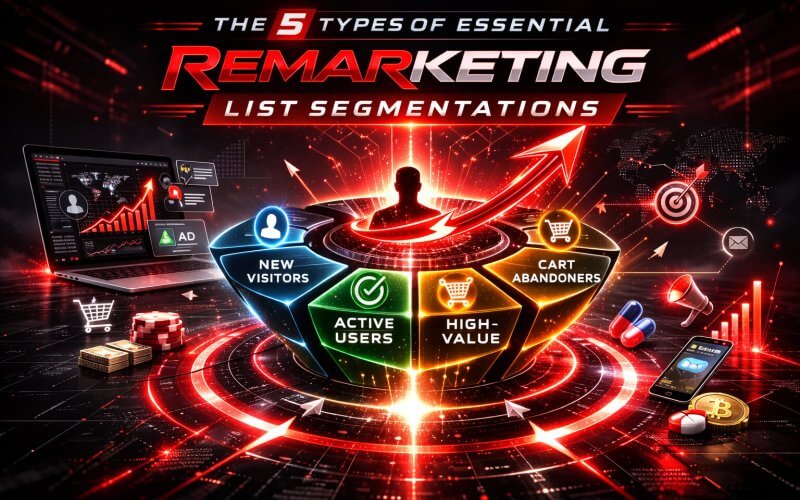
The 5 Types of Essential Remarketing List Segmentations

The 5 Types of Essential Remarketing List Segmentations and Why You Need Ad Banner Sets Created For Each

Foreword: This post is draft number two, for a future blog post (so this is unpublished, looking for a home), but I wanted to share it here first because:
A) I think it’s important to know what the essential remarketing segmentation lists to build for own sites or clients and
B) I wanted to get your feedback and questions about the best practices surrounding Remarketing List Segmentation and the blog article overall.

I appreciate any feedback and questions, to help make it a better post, prior to submission. [Note to marketers: Described here are Segmentation Lists you should build using the Google Adwords Remarketing Pixel, BUT the CONCEPTS can be applied to ANY Ad Network/Social PPC use or CRM/Email Marketing Automation tool. Also, this post addresses the importance of each segmentation list, which then corresponds to having a NEED to produce ad banner sets with messaging+creative that matches appropriately to each list.
In other words, up to FIVE different types of Ad Banner Sets is often required for an advertiser to MAXIMIZE the effectiveness of running remarketing campaigns, using these five remarketing segmentation lists. By using these five, the ROAS (return on ad spend) can increase as much as xxx% by using the appropriate ad banner set, with the corresponding remarketing list.]
(Portland, OR – by Ed Bisquera) – Alright, so this post isn’t about WHAT remarketing is as much as it’s about what remarketing lists should you build. After all, you could just build ONE remarketing list for everyone that visits your website overall, but that wouldn’t serve your brand well or your offer to your audience justice. You want to be presenting remarketing ads that are pertinent to the buying path your website audience is on AND that is also based upon what content they’ve consumed or actions they have or have not taken.
Let’s also keep in mind that remarketing is here to stay, in our digital marketing toolbox and that by utilizing remarketing businesses can:
1. Increase their overall conversion rates with more remarketing impressions*.
2. Reach 90% of all internet users worldwide using the Google Display Network and Facebook Ad Network*.
3. Increase repeat visitors by 50%, boost conversions by 51% and increase time on site by 300%*!
4. Help SEO efforts seven-fold or make your SEO 7 Times More Awesome, because Remarketing keeps your brand in front of your audience and compels them to take action*.
(* Source: Wordstream.com)

So, let’s get down to what the FIVE different types of Remarketing Segmentation Lists EVERY competition-crushing local business needs to have, before running ANY Remarketing Campaigns. [Disclaimer: First, list segmentation will vary a bit, depending on whether you’re going to use STANDARD or DYNAMIC remarketing. In this post, we’ll focus on STANDARD, then address using dynamic remarketing where appropriate.]

Remarketing Segmentation List 1: Homepage viewers

Strategy: This is a list built upon the most broad interaction a person can have with a business website. So, as a marketer this would be anyone that views your home page, after clicking through from your email signature, social media profiles, business listings, basically anywhere on the web you have listed, promoted and advertised your main url, which goes straight to your homepage. You’ll want to have a general Ad Banner Set, that is more general in nature and speaks to your brand offer, so this type of list would most likely require a “Branding” type of Ad Banner.

Why create list 1?: To reinforce your brand across the web after people visit your home page, but that doesn’t dive deeper into your site’s content OR that have visited your website but haven’t crossed into the other types of segmentation lists as described below. It is said that a person needs to see your ad/brand at least SEVEN times before they begin to trust your brand/business and are able to recall well. If the person has never heard of you but had an initial introduction in some way to visit your home page for whatever reason and didn’t take action, they likely clicked away. Recapture their interest, present your brand again and again, by using an ad banner set to reach this list of people. How to do it: See attached document from Google.

Remarketing Segmentation List 2: Category Page Viewers

Note: As a marketer of mostly “static” services, you may or may not have categories of services and/or content categories on your website. It’s assumed that you maintain a blog and produce content on your website, that is categorized. So while this may not pertain to you at the moment, understand that you may have a need for creating this type of list in the future for your own consulting company and more importantly it’s likely your clients will need to create this type of List. This list and strategy, works especially well for multi-service category sites or e-commerce.
Using Standard Remarketing Strategy: Showcase display banner ads that match up to different product or service categories. People in this list have shown interest in a particular category or “division” of your marketing service company, let’s say content category of “Video Marketing” so your ad banner messaging to this list can speak to specials, discounts, or beta programs directly related to this category/division of your company.
How to do it: You’ll want to create separate Remarketing Lists FOR EACH Service (or Product/SKU) Category using a URL that contains the “category name.”
You’ll also want to setup an “exclusion list” for users that move deeper down the purchase funnel, so you don’t overlap your Remarketing Lists+Remarketing Ad Banners. Basically, you don’t want people to see this List 2 Ad Banners, once they move to the product purchase phase and/or complete a purchase.
You do this by creating a custom combination list CONTAINING Service/Product Category page viewers, THEN EXCLUDE Lists 3-5 (described below, which is the offer page viewers, shopping cart abandoners, and past converted buyers). You’ll then repeat for each category this same process.
Using Dynamic Remarketing Strategy: This is an advanced strategy, reserved for experienced marketers that have worked with ecommerce sites/clients, dynamic product feeds and shopping cart systems. How to do it: If you care to dive into it deeper, see attached Google document or contact me with your questions and needs for your particular situation.

Remarketing Segmentation List 3: Specific Service, Product, Offer or Landing Page viewers

For marketers, this would be pages such as landing pages with lead magnet offers. So, if you’re running a cold email marketing campaign, this could be a list built from those people that open your email, click through to the landing page you want them go to, BUT that didn’t take any further action, for whatever reason. Or traffic could come from search ppc ads, social ppc ads, or from other advertising channels.
This list could also be specific service or product pages on your website people have viewed, but did not go any further down the purchase funnel. They didn’t click on the buy button, add to shopping cart, or in the case of a lead magnet offer, they didn’t “Optin” with their email.
Strategy: You’ll want to create an Ad Banner set that re-engages users with ads content referencing this page type (landing pages and/or specific service or product pages) or with “dynamic ads” if an e-commerce site. These Ad Banners would include the Service/Product the person previously viewed (for dynamic remarketing of e-commerce sites we’ll discuss later in a follow up post). Your messaging+creative that is designed in the Ad Banners, may also speak to special discounts or offers that resonates with your potential customer to take immediate action.
How to do it: You’ll just create a remarketing list that includes all visitors to specific service or product pages on your website. Then you’ll want to EXCLUDE list types #4 & #5, “Shopping Cart Abandoners” and “Past conversions,” respectively.

Remarketing Segmentation List 4: Shopping Cart Abandoners

These are folks who added products to a shopping cart OR clicked on the buy button, but didn’t complete the purchase. These are also visitors that filled out a Lead Magnet Form BUT didn’t press the “Submit” button on the form. This list is likely going to be smaller overall, but they usually perform better, conversion-wise, versus a more broad based type visitor to your homepage.
Strategy: So basically you’ll want these visitors who were “almost done” completing the wanted action (buy conversion or lead conversion) and invite them back through the Ad Banners’ creative and messaging, to complete the process.
How to do it: You’ll build it from the logic of “Visitors of a page who DID NOT visit another page” in the drop-down menu (on the Google Adwords dashboard, under Audiences, which is beneath the Shared Library Tab). You’ll choose the URL of the shopping cart page OR the URL of the Lead Magnet Form Page.
Next, just EXCLUDE visitors who DID CONVERT, by selecting the conversion page aka the “thank you page” or whatever confirmation page that confirms those people have converted or submitted a completed lead form.

Remarketing Segmentation List 5: Past visitors that have CONVERTED

These are the visitors that bought from your site, who are now customers OR they took a conversion action, such as submitting their contact info in a lead form.
Strategy: You’ll want to run Ad Banner display ads to upset or cross-sell these customers since they are now part of your list and have actually taken valuable action on your site already. Your Ad Banner messaging could also recommend similar content, services or products to they’ve already consumed or bought.
How to do it: Easy peasy – just create a remarketing list who have reached your conversion page or purchase confirmation page. And that’s it, you’ve just built the FIVE Remarketing Segmentation Lists, highly recommended to maximize your remarketing advertising campaigns.

It is recommended you keep the overall number of remarketing lists to the strategies listed above, and you may have fewer or more, depending upon your volume of site traffic and the way your site is structured. Keep in mind the fewer the lists, the more people will be available in the lists and it will often be easier to optimize and track the statistical differences.

One last thing to note: the length of your “cookie duration” (the length of time Google keeps those visitors that have been “pixeled” aka “cookied” by your remarketing pixel) will depend on your objectives and the RELEVANCY your ad is.
For example, an e-commerce site selling Halloween costumes, may choose a shorter cookie length, say 15-30 days, since it is an date specific event and it may not take as much time for a person to decide to purchase. On the other hand, a financial services or real estate company may choose a cookie length of 3 months to a year since the sales cycle is much longer.

Remarketing is a very powerful digital marketing tool for advertisers and marketers, and using the best practices of building, at minimum, the Essential FIVE Remarketing Segmentation Lists for your website, will help you maximize your remarketing dollars and help you reach and/or exceed your ad campaign goals.
If you have further questions or comments, please feel free to leave them below. And I invite you to follow me on Twitter at @edbisquera for further content regarding remarketing, or just to say “hey” and stay in touch.