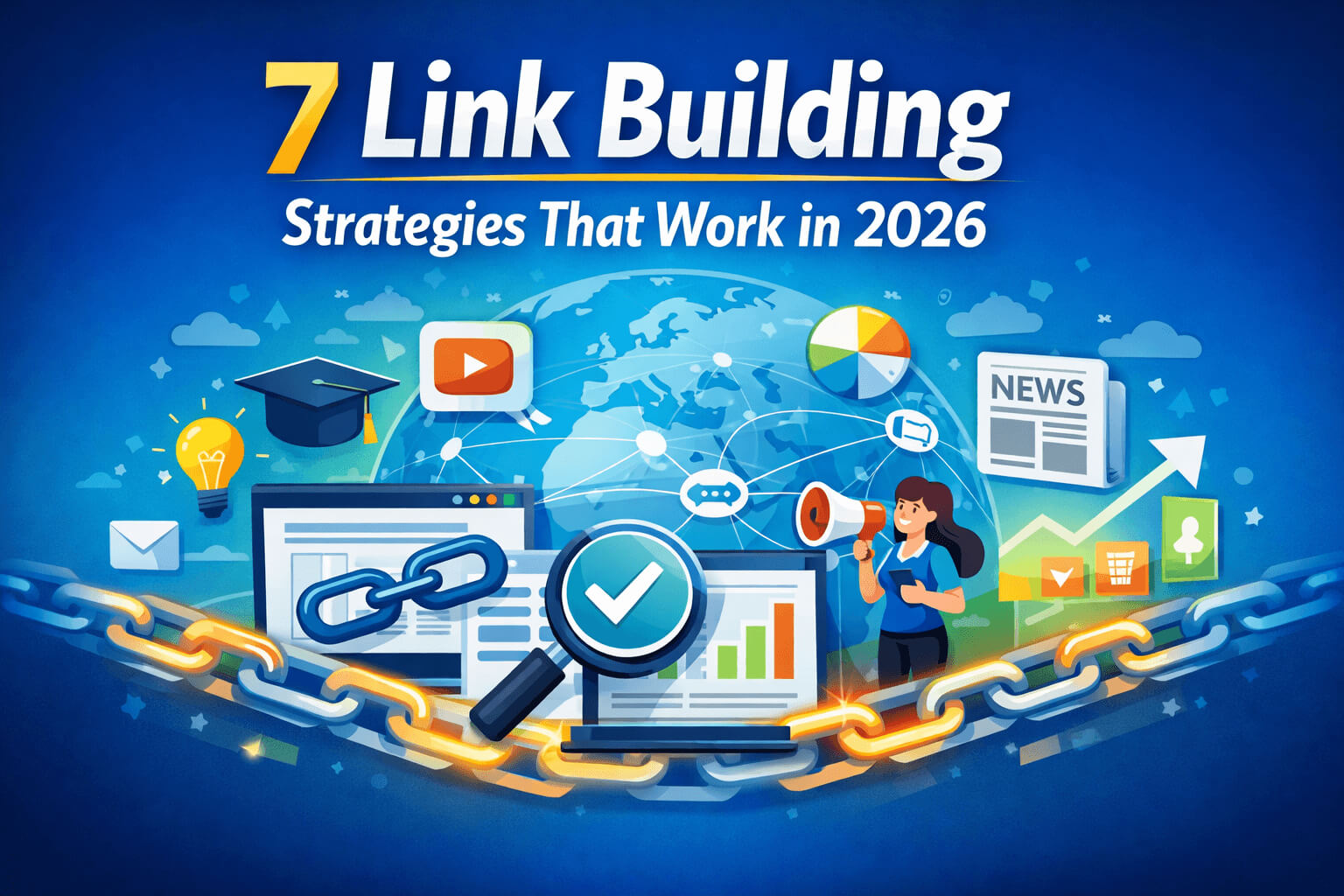
7 Amazing strategies to build links in 2026

**Updated for 2026

Although Google has aggressively cracked down on manipulative link building over the years, links remain one of the strongest ranking signals in search.

The difference in 2026 is how those links are evaluated.

From Google’s perspective, links should be the byproduct of real value – earned through relevance, authority, and genuine editorial decisions. Forced links, mass outreach, and cross-niche spam no longer move the needle and often do more harm than good.

Google has been clear about this direction in its own documentation on link spam and ranking systems, particularly in its Google Search Central guidelines.

Today, Google evaluates who is linking, why they’re linking, and how well the link fits within the surrounding content. Relevance, topical alignment, and editorial intent matter far more than raw volume.

That said, despite tighter enforcement and smarter algorithms, there are still several gray-hat-leaning but safe link building strategies that are actively used by SEO professionals – and they still work when done properly.

Below are 7 proven link building strategies that continue to perform in 2026 without putting your site at risk.


1. Guest Posting (Done Properly)

Guest posting never disappeared – it just evolved.

In 2026, guest posts only work when:

  • The site is topically relevant
  • The content adds real value to that audience
  • The link placement makes editorial sense

Google has repeatedly clarified its stance on guest posting in its Google Search Central documentation, noting that editorial intent is the deciding factor – not the act of guest posting itself.

What still works is relationship-driven publishing on authoritative, niche-aligned sites. When executed properly, guest posting delivers:

  • Contextual backlinks
  • Brand exposure
  • Trust signals
  • Long-term industry relationships

2. Expert Roundups (Modernized)

Expert roundups are still effective, but only when executed strategically.

The outdated “50 experts answer one generic question” format has largely lost impact. What works today are focused, insight-driven roundups that resemble original research or expert panels.

Well-executed roundups align closely with digital PR methodologies, a topic frequently discussed by platforms like Ahrefs and SEMrush.

Beyond links, roundups help:

  • Identify key influencers in your niche
  • Build warm outreach lists
  • Encourage organic shares and secondary links

3. Turning Brand Mentions into Links

This remains one of the easiest wins in link building.

If your brand, product, or content is mentioned without a link, you already have context and intent working in your favor. Converting those mentions into links is often a simple outreach task.

Tools like Ahrefs and BuzzSumo make it easy to identify unlinked mentions across the web.

These links are highly trusted because they’re:

  • Editorial
  • Contextually relevant
  • Difficult to fake

4. Broken Link Building

Broken link building is still effective because it solves a real problem.

The core process has been well documented by industry authorities such as Backlinko, and it continues to work when paired with quality content.

In 2026, success depends on improvement, not duplication. Your replacement content must be:

  • More current
  • More comprehensive
  • Clearly better than the original

When done correctly, broken link building produces clean, one-way editorial links with minimal risk.


5. Explainer Videos & Visual Assets

Text-only linkable assets are becoming harder to pitch.

Short explainer videos, diagrams, and visual summaries perform exceptionally well because they:

  • Improve user engagement
  • Fit naturally into editorial content
  • Offer assets publishers don’t want to create themselves

This trend aligns closely with Google’s push toward helpful content and user experience, outlined in its Helpful Content system documentation via Google Search Central.

Visual assets embedded within high-quality content frequently attract links organically over time.


6. Scholarships (Still Effective, More Scrutinized)

Scholarship link building still works – but it’s under closer scrutiny than ever.

SEO communities such as Search Engine Journal have highlighted how low-effort scholarship campaigns are increasingly ignored.

What still works:

  • Legitimate scholarships with real criteria
  • Transparent branding
  • Actual award distribution

When executed correctly, scholarships can earn high-authority educational links that are otherwise extremely difficult to obtain.


7. HARO & Journalist Platforms

Platforms like Help a Reporter Out remain valuable for earning top-tier media links, but competition is fierce.

To succeed in 2026, contributors must provide:

  • Original data or insights
  • First-hand experience
  • Fast, well-structured responses

HARO works best when treated as a PR channel, not a link building shortcut.


New in 2026: Linkable Data & Mini-Studies

One of the strongest modern strategies is publishing small, niche-specific datasets.

This approach mirrors tactics used in large-scale studies by companies like SparkToro, but can be executed effectively even at a smaller scale.

Original data gives journalists and bloggers something to cite, which naturally attracts high-quality backlinks.


New in 2026: Content Refresh Links

As publishers update older content, outdated references are removed.

By monitoring aging resources and publishing refreshed, authoritative replacements, you can earn links during editorial update cycles – one of the most natural link acquisition moments available today.

This tactic aligns closely with content decay strategies discussed by platforms like Ahrefs.


What to Avoid

So-called “niche edits” placed on hacked or compromised sites are not recommended unless you fully understand the risks. These links are unstable, temporary, and increasingly easy for Google to invalidate.

As Google’s spam detection systems improve, context and intent outweigh manipulation every time.


Final Thoughts

Link building hasn’t died – it’s matured.

The sites that win in 2026 focus on:

  • Editorial relevance
  • Topical authority
  • Long-term asset creation

If a link makes sense to a human reader, it usually makes sense to Google too.

Nikolay Stoyanov is a well-known Bulgarian SEO expert with nearly 10 years of SEO experience. He blogs about SEO on his blog NikSto.com. Nikolay practices 100% white hat SEO and has a vast experience in keyword research, on-page optimization, SEO auditing and white hat link building. He enjoys learning new things, making new friendships and improving his skills all the time.